
Case study
Managing curbside expectations when the store is inventing the process
In early 2020, contactless pickup had to work before every system caught up. I put timing and confirmation into the messages customers already received.
- Role
- Staff UX Designer, The Home Depot
- Scope
- Ready-for-pickup email, check-in confirmation, field discovery
- Key decision
- Make arrival timing a two-way signal between customer and store
- Outcome
- Sixty-day pilot in 50 stores reported on-time expectations, door-to-door times under five minutes, and fewer fulfillment-switch calls (deck-stated, unverified)
The field made the variance obvious
In early 2020, Home Depot had to invent contactless pickup while regulations and customer habits changed week to week. Associates, signage, and email carried a lot of the experience. The failure mode I kept seeing was not only slow delivery—it was uncertainty. When customers did not get feedback after check-in, they left the car, called to change fulfillment, or assumed something was wrong.
I interviewed store managers, associates, and customers. Orders varied wildly in size and complexity. Store layout changed door-to-door time. Fulfillment-channel changes disrupted the floor. Customers expected a confirmation when they checked in, and they did not share one definition of “on time.”
Analysis added a few usable baselines: customers expected delivery in under five minutes, average door-to-door time was 3.5 minutes, and 30% of pickup customers called to change their pickup method.
Alignment started from a problem statement, not a finished journey
I told partners that missing feedback during pickup made customers feel uncertain and more likely to leave the designed process. I kept unfinished journey sketches out of the “finished artifact” column; expectation-setting belonged in communications, not only in associate heroics.
ETA in the email, confirmation at check-in
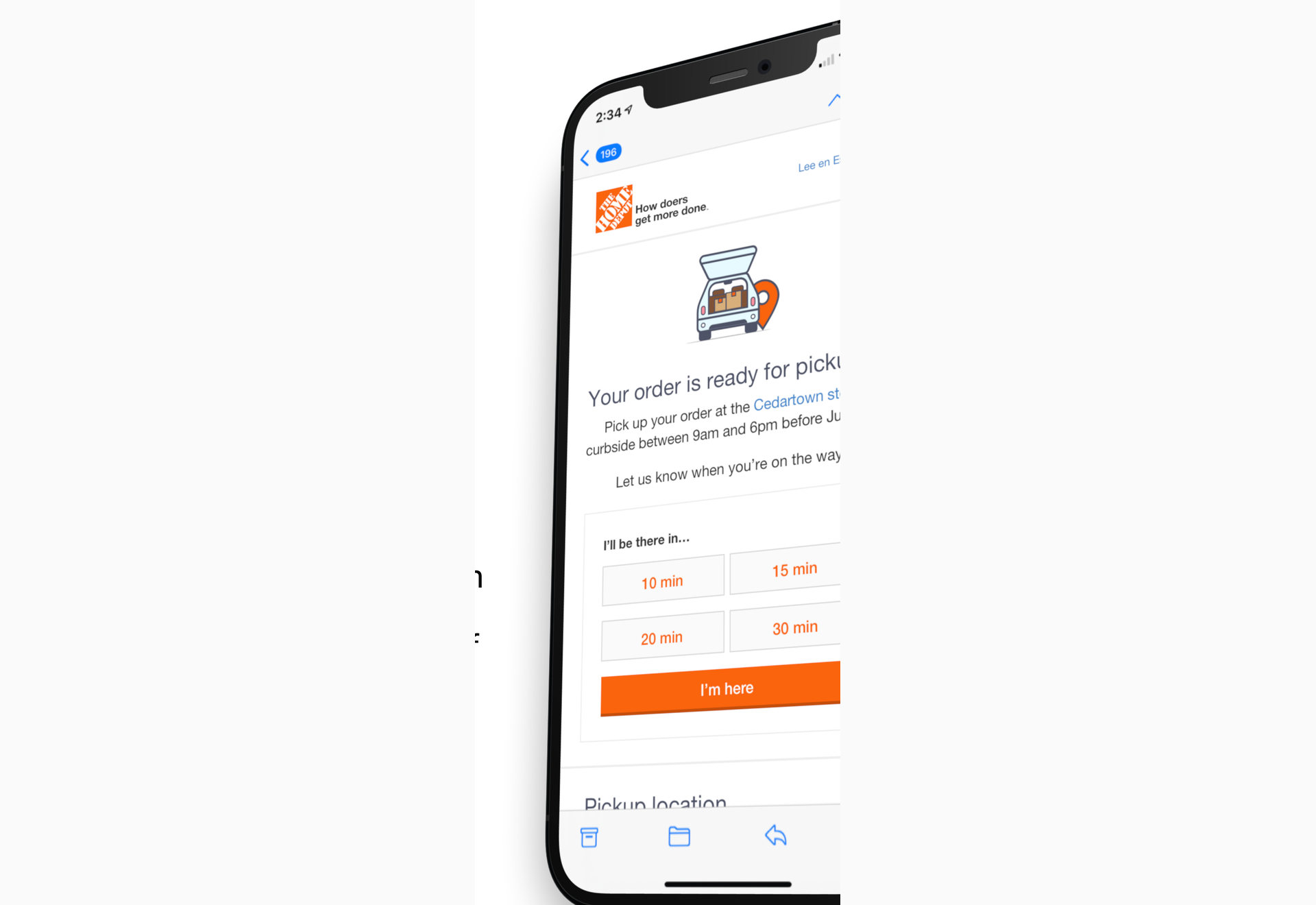
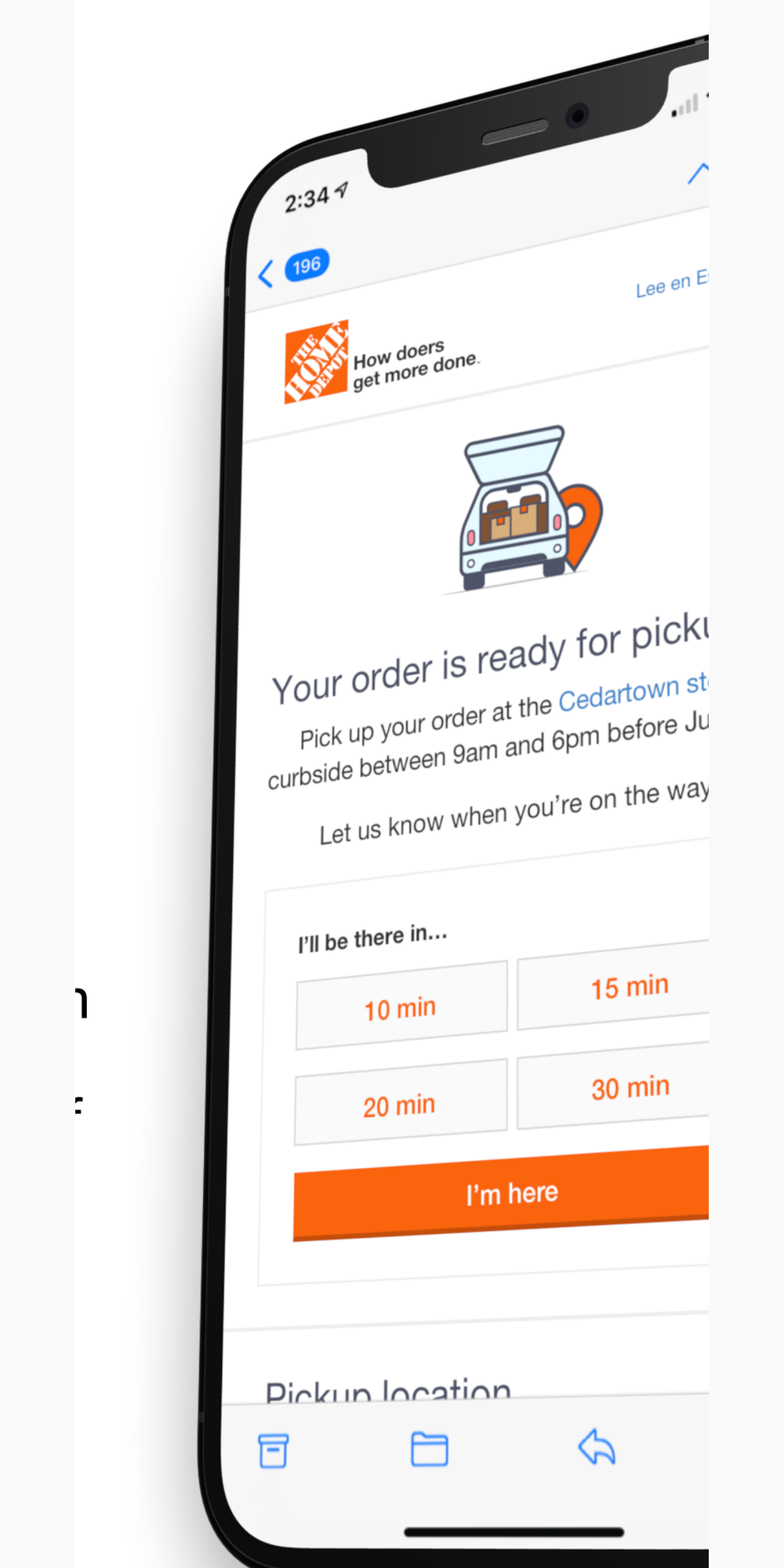
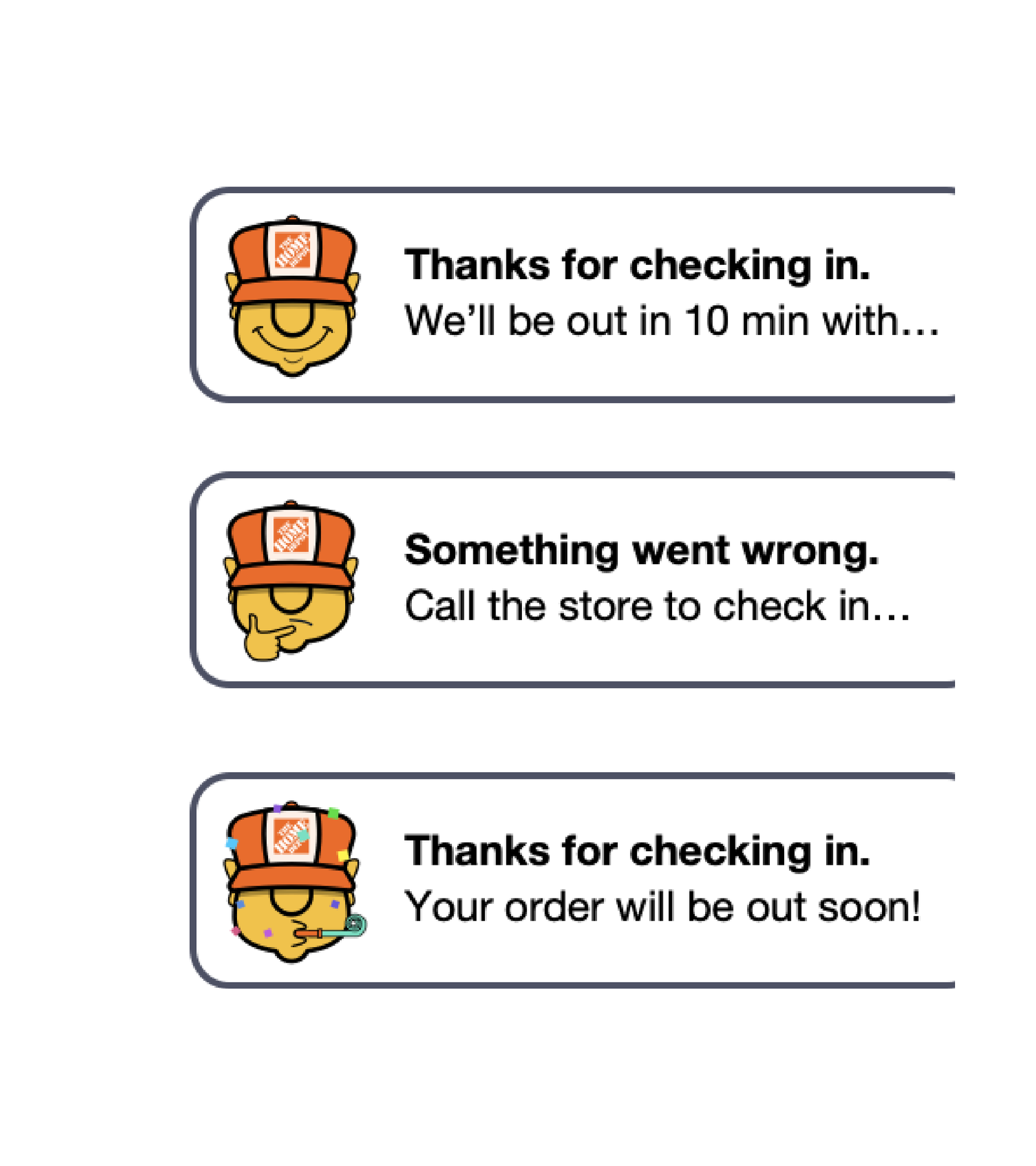
The decision that changed the work was to make timing a two-way signal. The ready-for-pickup email said when and where to come, asked for an ETA, explained how to get help, offered Spanish, and avoided unrelated fulfillment options. Check-in confirmation told customers when they were successful, when to call the store, or when the order would take longer.
Outcome
Fifty stores, sixty days
After a 60-day pilot in 50 stores, about 90% of customers said the order arrived when they expected it. Average door-to-door time was 3.8 minutes with ETAs and 4.5 minutes without—both under the five-minute goal. Fewer than 10% of pilot customers called to switch fulfillment, against a prior baseline above 30%. Those figures are deck-stated and unverified in my career record.
My takeaway: when operations are inventing the channel, expectation design is not decoration. It is how you keep customers and associates in the same playbook.