Shapes · Product system framework
A design system that documents the product, not just the UI.
A product becomes unavailable. Which screens change, which actions are blocked, and what happens to checkout? A component library can’t tell you. I’m building Shapes so designers and engineers can follow a rule from where it’s defined to every interface it touches.
Side project · in development- Role
- Creator. I designed the reference model, the authoring workflow and the workspace.
- Audience
- Designers and engineers on product teams with complex domain rules
- Status
- Working prototype with a sample retail domain; testing with practitioners
- Early signal
- Change-impact questions answered 5× faster than with existing docs
The problem
A rule changes, and the team has to piece together the whole picture.
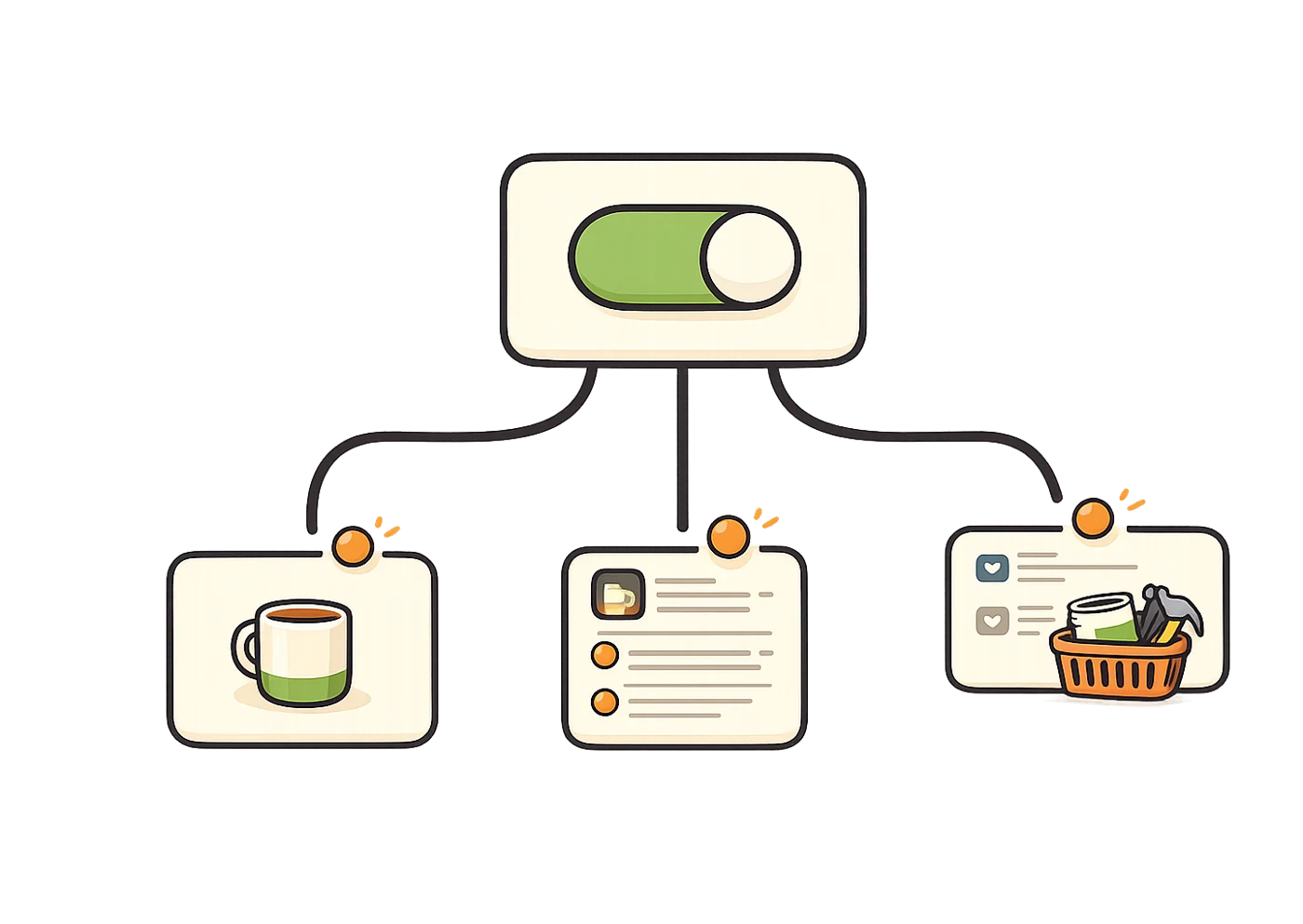
On every large product I’ve worked on, the same thing happens. A rule changes (availability, eligibility, a permission) and nobody can say with confidence everything it affects. The component library explains how the card is built. The availability rules live in a PRD. The action conditions live in code. Someone has to stitch it together by hand, and usually some piece gets missed.
A useful design system shouldn’t stop at the parts. It should explain the product they make up.
Options explored
Where should the meaning live?
Key decisions
Define the product once. Explain each context.
Model first, then style every representation
Define a Song once: its identifier, attributes and actions. Its card, list row and table row all follow the definition, so they can’t drift apart.
Boundaries around shared identity
Catalog price and cart-line price follow different rules. Quantity belongs to the cart line, not the product.
Implementation, pattern, standard
Nothing is promoted automatically. Two things that look alike may not mean the same thing.
Review is part of authoring
A screenshot shows that a control exists, not what it does. Contributors accept, edit or reject each interpretation, and unverified claims stay open with an owner.
Scope
One complete path before anything advanced.
I scoped the first release around one complete authoring path: document an interface, model what it means, connect its context and publish the reference. Automatic extraction and visual editing can wait until that path is worth maintaining.
Early results
Make understanding faster and keep the upkeep small.
I’m testing the connected retail reference against conventional documentation. In moderated one-on-one sessions, six designers and engineers explained the same Product Card and traced the same availability change, once with each approach.
What I took forward
Looking alike doesn’t mean meaning the same thing. A system that records why something varies is worth more than one that forces everything to match.
Next case · Many Hats