Indeed · Employer tools · Job Refresh
Renew a job post without posting it twice.
Employers copied stale jobs to look fresh and usually left the original open, so one opening became several active posts. I proposed Refresh: renew the existing post through a meaningful update. It ran as a six-month free trial, then joined Sponsored Jobs.
- Role
- Senior UX Designer. I handled research, the cross-team proposal, information architecture, interaction design, messaging and prototypes.
- Team
- Product owner, lead engineer, and the engineers exploring duplicate reduction
- Timeline
- A six-month free trial for a segment of free posts, then a Sponsored Jobs feature
- Outcome
- Employers said Refresh saved time and effort compared with reposting
The problem
The workaround revealed a different product need.

I was testing applicant-management concepts with employers when the same thing kept coming up. They duplicated stale posts so the job looked active again, and usually left the original open. Nobody prompted it.
I took the finding to my product owner and lead engineer. A separate platform effort was already trying to reduce duplicates. My research explained why more kept appearing.
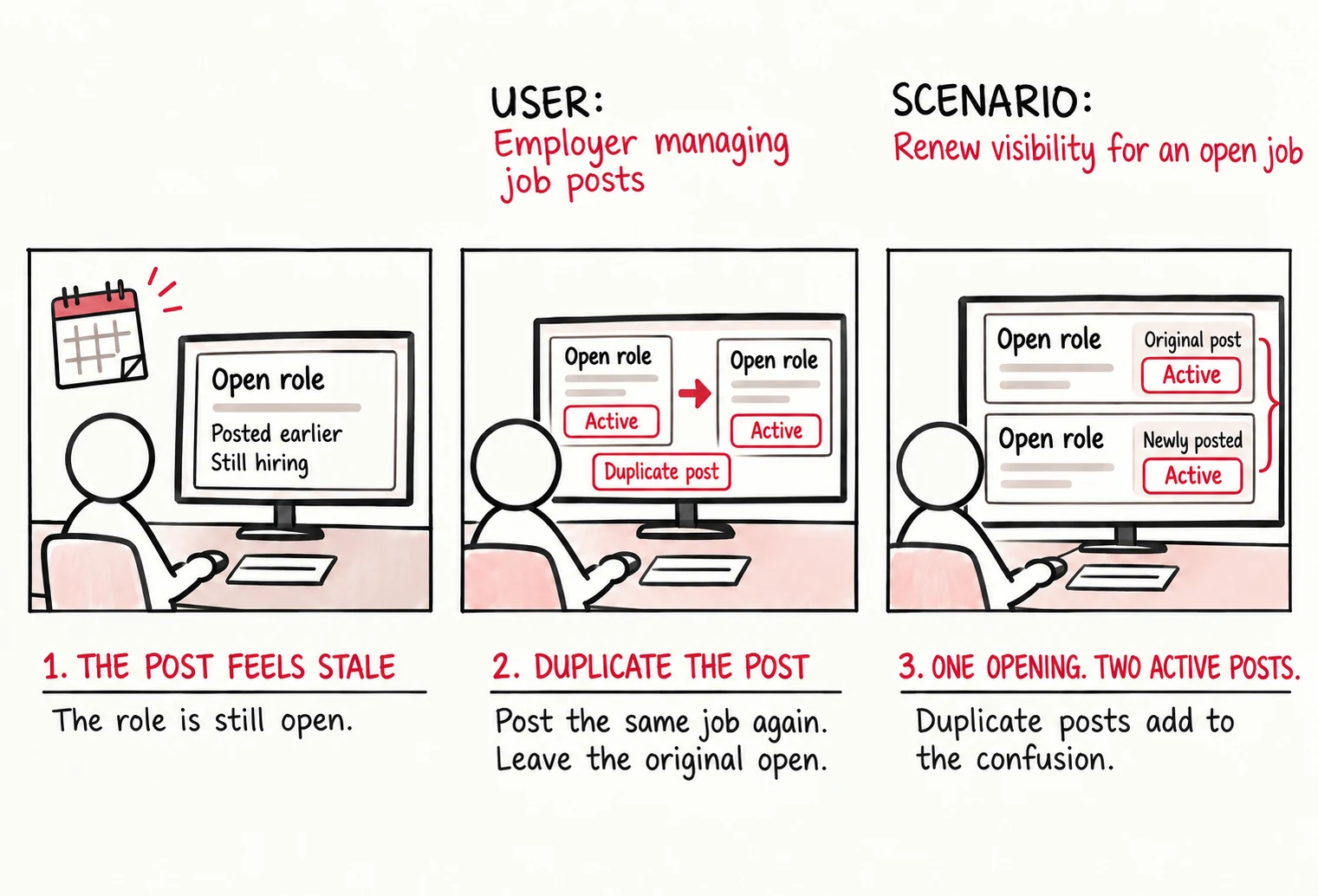
The duplicates were a symptom. The employer wanted the job to look current.
Options explored
Change the behavior before cleaning up the records.
Engineers were looking for ways to find and merge duplicates. I proposed a complementary path: help employers keep the original record alive.
Key decisions
Keep the job. Renew its relevance.
Renew the post, skip the copy
Refresh works on the original, so there is never a second record to clean up. One opening stays one post.
Require a real update
Refresh stays off until pay, the description or company info changes. Employers get visibility, and job seekers get a more current post.
Put the action on the post
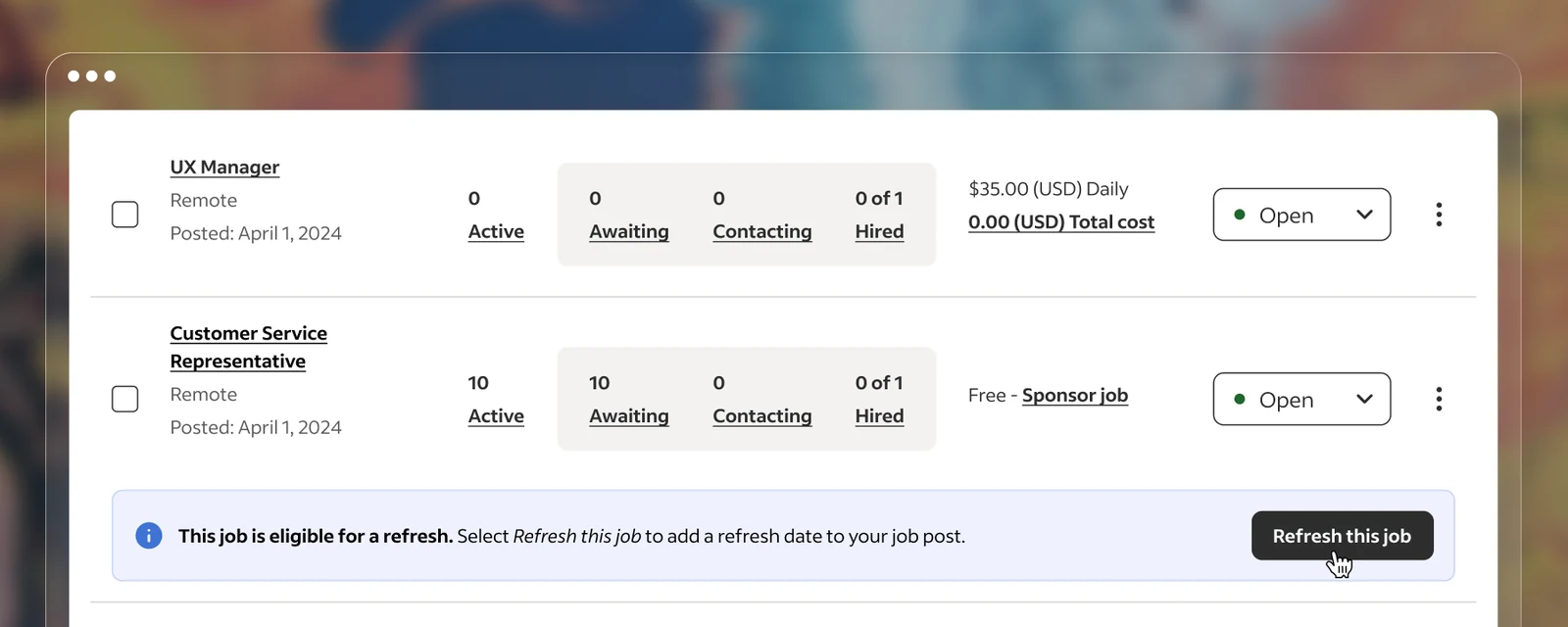
The eligibility message sits under the job it is about and adds a refresh date to that post. I owned the flow, messaging and prototypes.
Trial it, then fold it in
Refresh was free to a segment of posts for six months before it became a Sponsored Jobs feature.
The screen
The message lives on the job it renews.
It started with the Monetization team looking for more value in Sponsored Jobs. I proposed a feature inventory and a Kano-based approach to employer expectations, then built three prototype directions with product and engineering. A strategy deck compared seven freemium models. Applicant search and filtering stayed explorations; we paused over potential hiring bias.
Outcome
Less effort for employers, with the limits stated.
The team offered Refresh to a segment of free job posts. Employers said it saved time and effort compared with duplicating and reposting. The feedback was qualitative.
What I took forward
Look at the intent behind a workaround. Tying that intent to another team’s constraints opened a product path at the source of the behavior.
Next case · The Home Depot